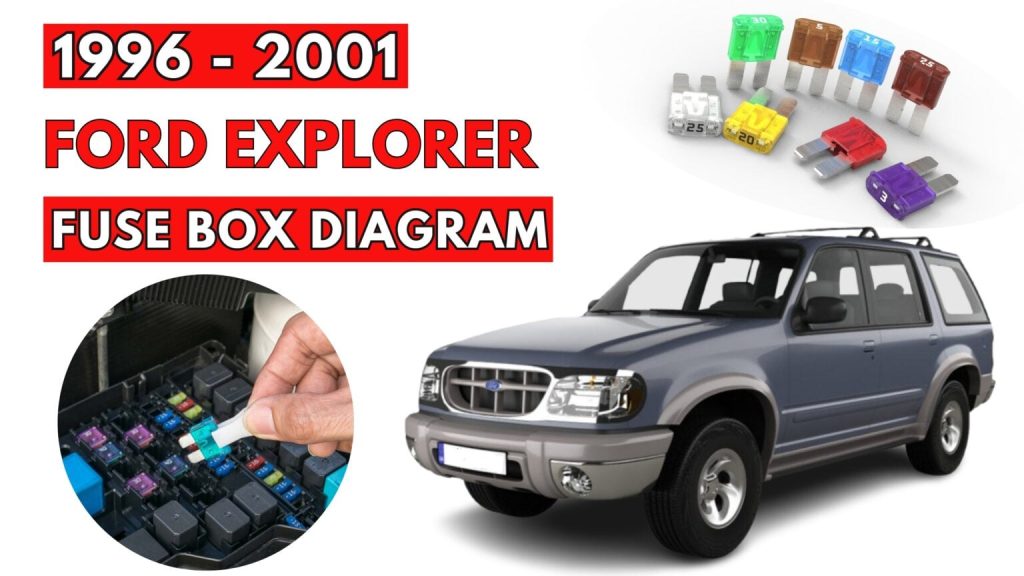
Ford Explorer (1996 – 2001) Fuse Box Location and Diagrams
Do you have electrical issues with your 1996–2001 Ford Explorer? To help identify and changing fuses simpler, this guide provides locations for fuse boxes along with pictures. Correct your Explorer without relying on conjecture.
Checking and Replacing Fuses
Fuses protect your vehicle’s electrical system from overloading. If electrical parts in your vehicle are not working, the system may have been overloaded and blown a fuse. Before you replace or repair any electrical parts, check the appropriate fuses.
The following charts tell you which fuses protect each electrical part of your vehicle. If a fuse blows, all the parts of your vehicle that use that circuit will not work.
Once you have determined which fuses to check, follow the procedures under Checking and replacing fuses.
If you need to check a fuse, follow these steps:
- Find the fuse panel, which is located in the left end of the instrument panel. The power distribution box (described earlier in this section) is found in the engine compartment, mounted on a bracket attached to the left fender apron.
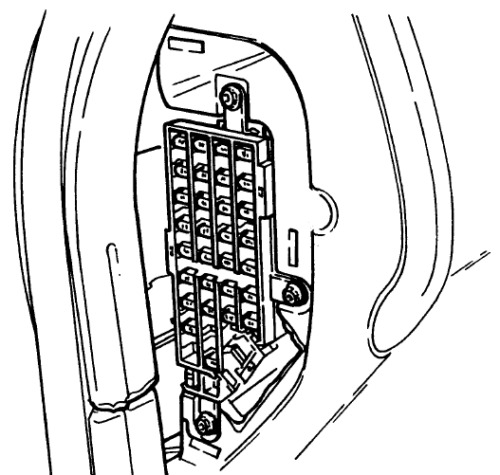
To access the fuse panel, remove the fuse panel cover by inserting your finger in the divot and pulling on the cover. The underside of the cover contains four spare fuses. A fuse pulling tool is located in the lower right corner of the fuse panel in case you need to replace a blown fuse.
The spare fuses for your vehicle are color coded as follows: 10 amp — red, 15 amp — light blue, 20 amp — natural, 30 amp — light green. - On the fuse panel cover, find the number of the fuse you want to check. The diagram on the cover tells you where to locate the fuse on the panel.
- Check the fuse to see if it is blown. Look through the clear side of the fuse to see if the metal wire inside is separated. If it is, the fuse is blown and should be replaced.
 The side view of a fuse
- Replace the fuse with one that has the right amperage rating (see previous chart).
- Put the fuse panel cover back on.
Even after you replace a fuse, it will continue to blow if you do not find what caused the overload. If the fuse continues to blow, have your electrical system checked.
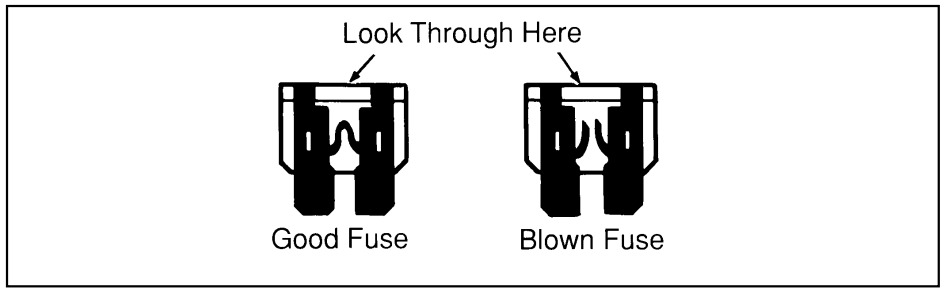 The side view of a fuse
Fuse Box Locations
Passenger Compartment
Fuse panel (located under the left hand side of the instrument panel)
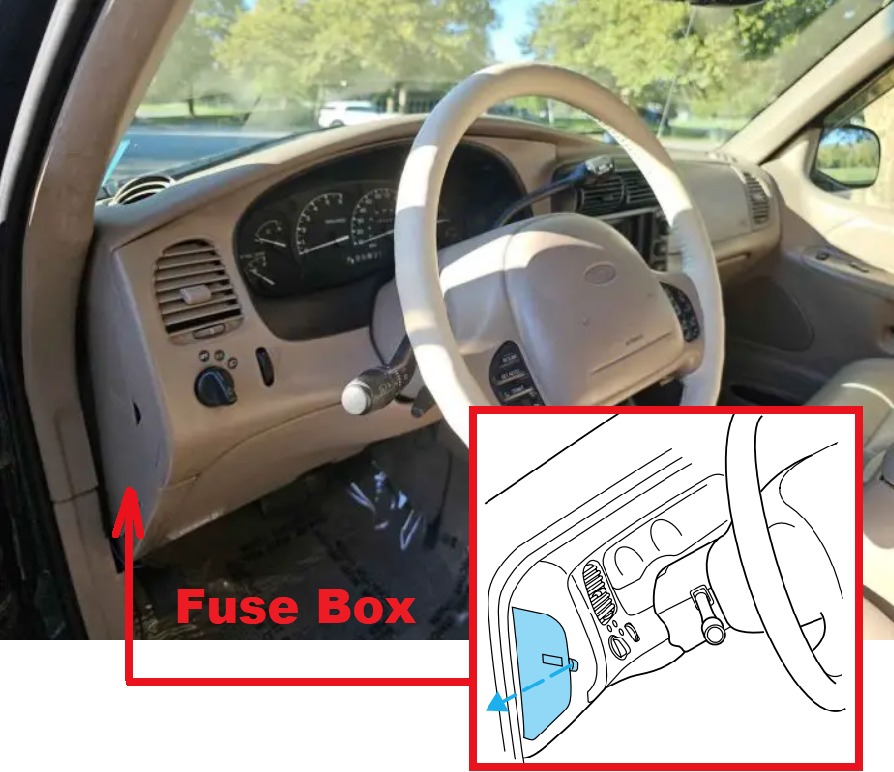 Pull the panel out to access the passenger compartment fuse panel.
Engine Compartment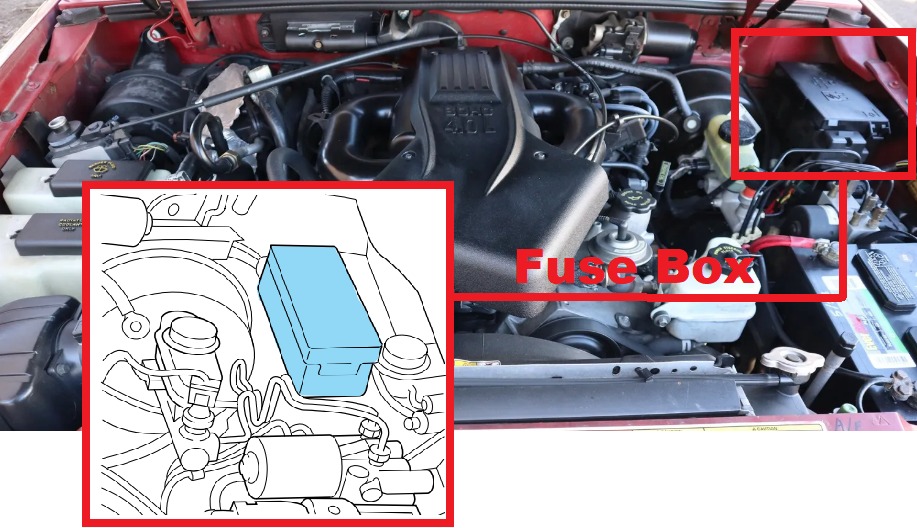
The high current fuses contained in the Power Distribution Box protect your vehicle’s main electrical systems from overloads; these fuses provide the connection between the battery and your vehicle’s electrical systems.
The high current fuses are coded as follows: 30 amp -light green, 40 amp – orange, 50 amp – red, 60 amp -blue.
RWARNING
- Always disconnect the battery before servicing high current fuses.
- Always replace the cover to the Power Distribution Box before reconnecting the battery or refilling fluid reservoirs.
A blown high current fuse may be replaced but will continue to blow until the cause of the overload condition is corrected. - Always replace a fuse with one that has the specified amperage rating. Using a fuse with a higher amperage rating can cause severe wire damage and could start a fire.
Passenger Compartment Fuse Box Diagram
Ford Explorer (1996)

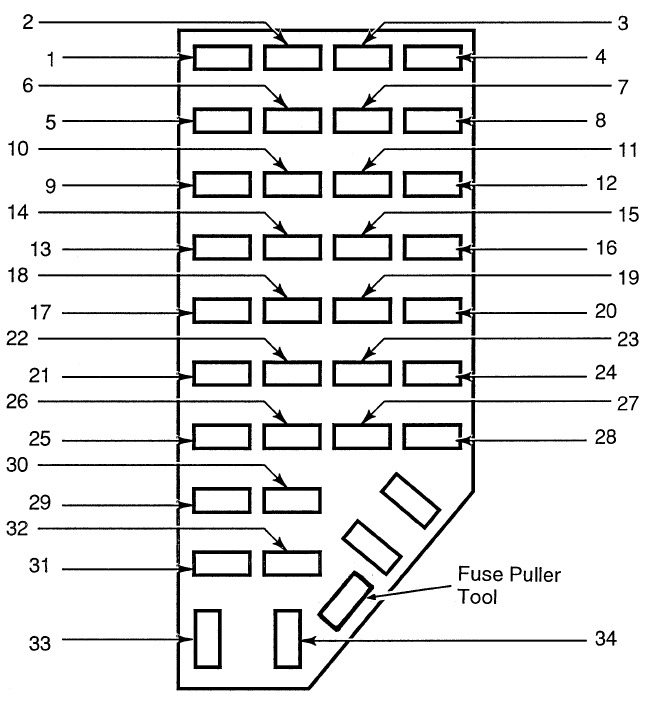
| No | Amp Rating | Description |
|---|---|---|
| 1 | 7.5 Amp | Power mirror. Power antenna |
| 2 | 7.5 Amp | High-mount stoplamp |
| 3 | 15 Amp | Parking lamps |
| 4 | 10 Amp | Left headlamp |
| 5 | 10 Amp | OBD system |
| 6 | 7.5 Amp | Air bag system. Blower relay |
| 7 | 7.5 Amp | Ilium, switches |
| 8 | 10 Amp | Right headlamp. Fog lamp system |
| 9 | 10 Amp | EATC memory. Seat memory. Message center. Cellular phone |
| 10 | 7.5 Amp | EATC system. Rear blower. Speed control. GEM system. Brake interlock. Overhead console. Automatic Ride Control |
| 11 | 7.5 Amp | Warning lamps |
| 12 | 10 Amp | Front/rear wash |
| 13 | 15 Amp | PCM system. Stoplamps. 4 wneel drive. Anti-lock brake. Speed control. Trailer tow |
| 14 | 10 Amp | Anti-lock system |
| 15 | 7.5 Amp | Air bag system. Alternator |
| 16 | 30 Amp | Front wiper |
| 17 | 15 Amp | Cigar lighter |
| 18 | 15 Amp | A/C system |
| 19 | 25 Amp | Ignition coil. PCM system |
| 20 | 7.5 Amp | Radio. Power Antenna. GEM system. Anti-theft. Cellular phone |
| 21 | 15 Amp | Hazard lamps |
| 22 | 10 Amp | Turn signals |
| 23 | 10 Amp | Rear wiper system |
| 24 | 10 Amp | Starter relay |
| 25 | 7.5 Amp | Speedometer. GEM system |
| 26 | 10 Amp | 4R44E/4R55E overdrive. DRL system. Backup lamps. 4 wheel drive. Rear defroster |
| 27 | 15 Amp | Under hood lamp. Map lights. Glove dox lamp. Dome lamp. Visor lamps. Accessory delay. Dimmer switch ilium.. 4×4 system |
| 28 | 7.5 Amp | Memory seat. GEM system |
| 29 | 10 Amp | Audio system |
| 30 | – | Not Used |
| 31 | 7.5 Amp | Aux. blower system |
| 32 | 7.5 Amp | Heated mirror. Heated backlite |
| 33 | 15 Amp | High beam lamps |
| 34 | 7.5 Amp | Lux audio system |
Ford Explorer (1997)
Use the fuse puller tool provided on the fuse panel cover to replace fuses.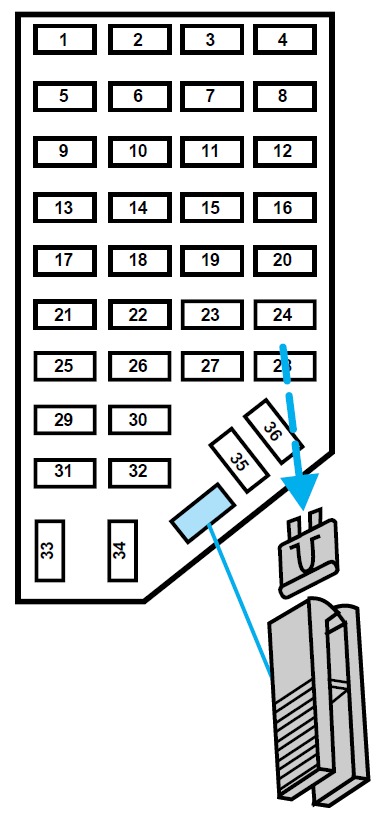
| Number | Fuse Amperage Rating | Circuits Protected |
| 1 | 7.5 amp | Power mirror, power antenna |
| 2 | 7.5 amp | High-mount brakelamp |
| 3 | 15 amp | Parking lamp, instrument cluster gauges |
| 4 | 10 amp | Left headlamp, lamp out warning |
| 5 | 10 amp | OBD system |
| 6 | 7.5 amp | Air bag system, blower relay, EATC |
| 7 | 7.5 amp | Illumination switches |
| 8 | 10 amp | Right headlamp, fog lamp system, DRL, lamp out warning |
| 9 | 10 amp | EATC system, seat memory, message center, cellular phone, autolamps |
| 10 | 7.5 amp | EATC system, rear blower, speed control, GEM system, brake interlock, overhead console, automatic ride control, lamp out warning |
| 11 | 7.5 amp | Warning lamps, autolamp |
| 12 | 10 amp | Front washer, rear washer & wiper |
| Number | Fuse Amperage Rating | Circuits Protected |
| 13 | 15 amp | PCM system, stoplamps, AWD, anti-lock brake, speed control, trailer tow |
| 14 | 10 amp | Anti-lock system |
| 15 | 7.5 amp | Air bag system, instrument cluster |
| 16 | 30 amp | Wiper run relay |
| 17 | 25 amp | Cigar lighter |
| 18 | 15 amp | A/C system |
| 19 | 25 amp | Ignition coil, PCM system |
| 20 | 7.5 amp | Radio, power antenna, GEM system, anti-theft, cellular phone |
| 21 | 15 amp | Turn/hazard flasher |
| 22 | 10 amp | Turn signals |
| 23 | 10 amp | Rear wiper system |
| 24 | 10 amp | Starter relay |
| 25 | 7.5 amp | Speedometer, GEM system |
| 26 | 10 amp | 5R55E/4R7OW overdrive, DRL system, backup lamps, AWD, rear defroster |
| 27 | 10 amp | Under hood lamp, map lamps, glove box lamp, dome lamp, visor lamps, accessory delay, dimmer switch illumination, 4×4 system |
| Number | Fuse Amperage Rating | Circuits Protected |
| 28 | 7.5 amp | Memory seat, GEM system |
| 29 | 10 amp | Audio system |
| 30 | – | Not used |
| 31 | 7.5 amp | Rear blower system |
| 32 | 7.5 amp | Heated mirror, rear defroster |
| 33 | 15 amp | High beam lamps |
| 34 | 7.5 amp | Lux audio system |
Ford Explorer (1998 to 2000)
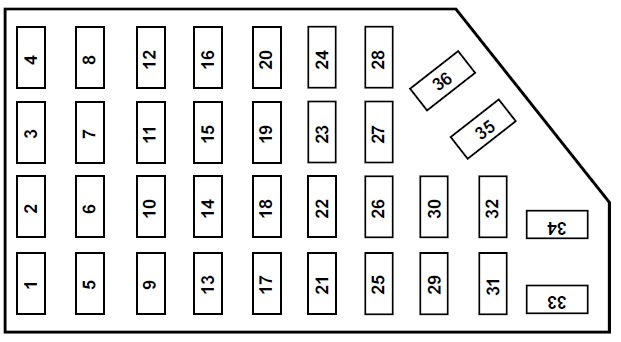
| Fuse/Relay Location | Fuse Amp Rating | Passenger Compartment Fuse Panel Description |
| 1 | 7.5A | Power Mirror Switch, Power Antenna, Memory Seat |
| 2 | 7.5A | Blower Motor Relay, Air Bag Diagnostic Monitor |
| 3 | 7.5A | Left Stop/Turn Trailer Tow Connector |
| 4 | 10A | Left Headlamp |
| 5 | 10A | Data Link Connector (DLC) |
| 6 | 7.5A | Rear Blower Motor (Without EATC) |
| 7 | 7.5A | Right Stop/Turn Trailer Tow Connector |
| 8 | 10A | Right Headlamp, Foglamp Relay |
| 9 | 7.5A | Brake Pedal Position Switch |
| 10 | 7.5A | Speed Control/Amplifier Assembly, Generic electronic Module (GEM), Shift Lock Actuator, Blend Door Actuator, A/C – Heater Assembly, Flasher, Overhead Console, Load Leveling Module |
| 11 | 7.5A | Instrument Cluster |
| 12 | 7.5A | Washer Pump Relay, Rear Washer Pump Relay |
| 13 | 20A | Brake Pedal Position Switch, Brake Pressure Switch |
| 14 | 10A | 4 Wheel Anti-Lock Brake System (4WABS) Module, 4WABS Main Relay |
| 15 | 7.5A | Instrument Cluster |
| Fuse/Relay Location | Fuse Amp Rating | Passenger Compartment Fuse Panel Description |
| 16 | 30A | Windshield Wiper Motor, Wiper Hi-Lo Relay, Wiper Run/Park Relay |
| 17 | 25A | Cigar Lighter |
| 18 | 25A | Drivers Unlock Relay, All Unlock Relay, All Lock Relay, Power Seats |
| 19 | 25A | PCM Power Diode |
| 20 | 7.5A | RAP Module, Generic Electronic Module (GEM), Radio |
| 21 | 15A | Flasher (Hazard) |
| 22 | 20A | Auxiliary Power Socket |
| 23 | — | Not Used |
| 24 | 7.5A | Clutch Pedal Position (CPP) Switch, Starter Interrupt Relay, Anti-Theft |
| 25 | 7.5A | Generic Electronic Module (GEM), Instrument Cluster, Securi-Lock |
| 26 | 10A | Battery Saver Relay, Electronic Shift Relay, Interior Lamp Relay, Electronic Shift Control Module |
| 27 | 15A | DRL, Backup Lamps Switch, DTR Sensor, Electric Shift |
| 28 | 7.5A | Generic Electronic Module (GEM), Radio, Memory Seat |
| 29 | 25A | Radio |
| 30 | 15A | Park Lamp/Trailer Tow Relay |
| 31 | — | Not Used |
| 32 | 10A | Heated Mirror |
| 33 | 15A | Headlamps, Daytime Running Lamps (DRL) Module, Instrument Cluster |
| Fuse/Relay Location | Fuse Amp Rating | Passenger Compartment Fuse Panel Description |
| 34 | 7.5A | Rear Integrated Control Panel, CD |
| 35 | 7.5A | Rear Blower Motor (w/EATC) |
| 36 | 7.5A | EATC Memory, CD, Rear Integrated Control Panel, Memory Seat, Message Center |
Ford Explorer (2001)
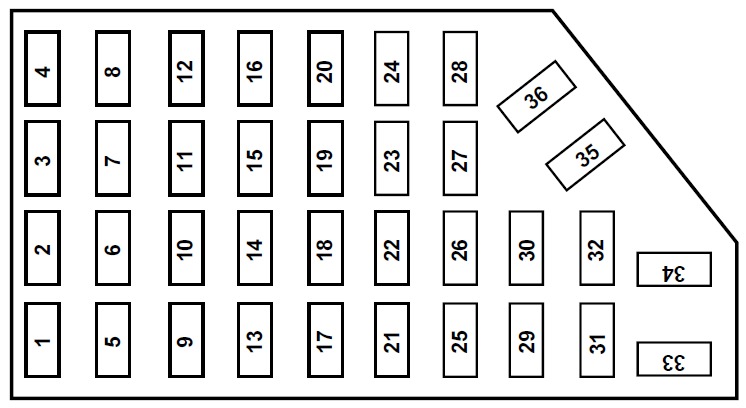
| Fuse/Relay Location | Fuse Amp Rating | Passenger Compartment Fuse Panel Description |
| 1 | 5A | Power Mirror Switch |
| 2 | 5A | Aux. High Mount Stop Lamp |
| 3 | 7.5A | Left Stop/Turn Trailer Tow Connector |
| 4 | 15A | Subwoofer |
| 5 | — | Not Used |
| 6 | 15A (With rear blower) 7.5A (Without rear blower) | Blower Motor Relay, Airbag Diagnostic Monitor |
| 7 | 7.5A | Right Stop/Turn Trailer Tow Connector |
| 8 | — | Not Used |
| 9 | 7.5A | Brake Pedal Position Switch |
| 10 | 7.5A | Speed Control/Amplifier Assembly, Generic electronic Module (GEM), Shift Lock Actuator, Blend Door Actuator, A/C – Heater Assembly, Flasher, Overhead Console, 4X4 Module |
| 11 | 7.5A | Instrument Cluster, 4X4 Module |
| 12 | 7.5A | Washer Pump Relay |
| 13 | 15A | Brake Pedal Position Switch, Brake Pressure Switch |
| 14 | 10A | 4 Wheel Anti-Lock Brake System (4WABS) Module |
| 15 | 7.5A | Instrument Cluster |
| 16 | 30A | Windshield Wiper Motor, Wiper Hi-Lo Relay, Wiper Run/Park Relay |
| 17 | 20A | Cigar Lighter, Data Link Connector |
| 18 | 25A | Power Door Locks |
| 19 | 25A | PCM Power Diode |
| Fuse/Relay Location | Fuse Amp Rating | Passenger Compartment Fuse Panel Description |
| 20 | 7.5A | Generic Electronic Module (GEM), Radio, Moonroof Relay, Power Window Relay, Power Down Back Window |
| 21 | 15A | Flasher (Hazard) |
| 22 | 20A | Auxiliary Power Socket |
| 23 | — | Not Used |
| 24 | 7.5A | Starter Interrupt Relay, Anti-Theft |
| 25 | 7.5A | Generic Electronic Module (GEM), Instrument Cluster, Securi-Lock |
| 26 | 10A | Battery Saver Relay, Interior Lamp Relay |
| 27 | 15A | DRL, Backup Lamps Switch, DTR Sensor |
| 28 | 7.5A | Radio |
| 29 | 20A | Radio |
| 30 | 25A | Power Seats |
| 31 | 5A | Rear Blower Motor |
| 32 | — | Not Used |
| 33 | 15A | Headlamps, Daytime Running Lamps (DRL) Module, Instrument Cluster |
| 34 | 5A | Rear Integrated Control Panel |
| 35 | 15A | 4X4 Module |
| 36 | 15A | Trailer Tow Relay |
Engine Compartment Fuse Box Diagram
Ford Explorer (1996)
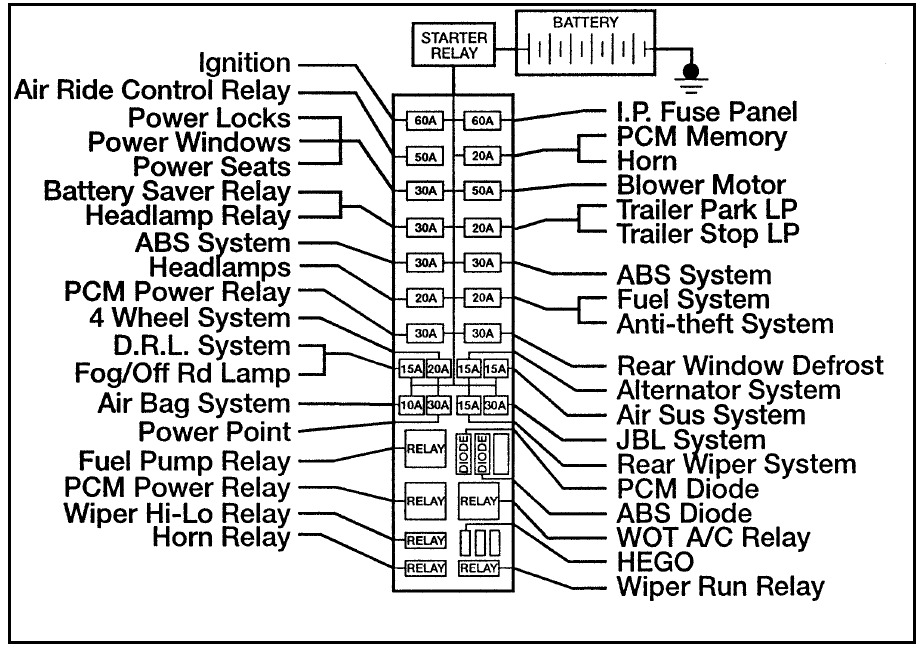
Power distribution box
Ford Explorer (1997)
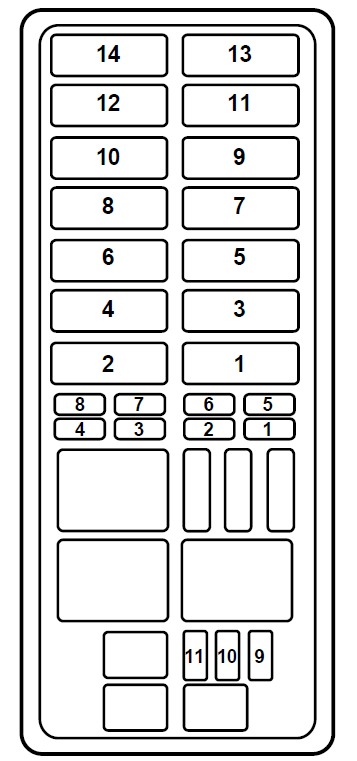
| High current fuse rating | Color |
| 30 amp | Light green |
| 40 amp | Orange |
| 50 amp | Red |
| 60 amp | Blue |
| Maxi fuses | ||
| Fuse | Amperage | Circuits protected |
| 1 | 30 | Rear window defrost |
| 2 | 30 | PCM power relay |
| 3 | 20 | Fuel system, anti-theft system |
| 4 | 20 | Headlamps |
| 5 | 30 | ABS system |
| 6 | 30 | ABS system |
| 7 | 20 | Trailer park LP and trailer stop LP |
| 8 | 30 | Battery saver relay and headlamp relay |
| 9 | 50 | Blower motor |
| 10 | 30 | Power locks, power windows and power seats |
| 11 | 20 | PCM memory and horn |
| 12 | 50 | Air ride control relay |
| 13 | 60 | Instrument panel fuse panel |
| 14 | 60 | Ignition |
| Mini fuses | ||
| 1 | 30 | JBL system |
| 2 | 15 | Rear wiper system |
| 3 | 30 | Power point |
| 4 | 20 | 4WD system |
| 5 | 15 | Air suspension system |
| 6 | 15 | Alternator system |
| 7 | 10 | Air bag system |
| 8 | 15 | DRL/Fog lamps/Off-road lamps |
| 9 | – | Not used |
| Maxi fuses | ||
| 10 | – | Not used |
| 11 | 20 | HEGO system |
| Relay number | Circuits connected |
| 1 | Wiper run relay |
| 2 | Horn relay |
| 3 | Wiper HI/LO relay |
| 4 | WOT A/C relay |
| 5 | PCM power relay |
| 6 | Fuel pump relay |
| Diode number | Circuits connected |
| 1 | ABS diode |
| 2 | PCM diode |
Ford Explorer (1998 to 2000)
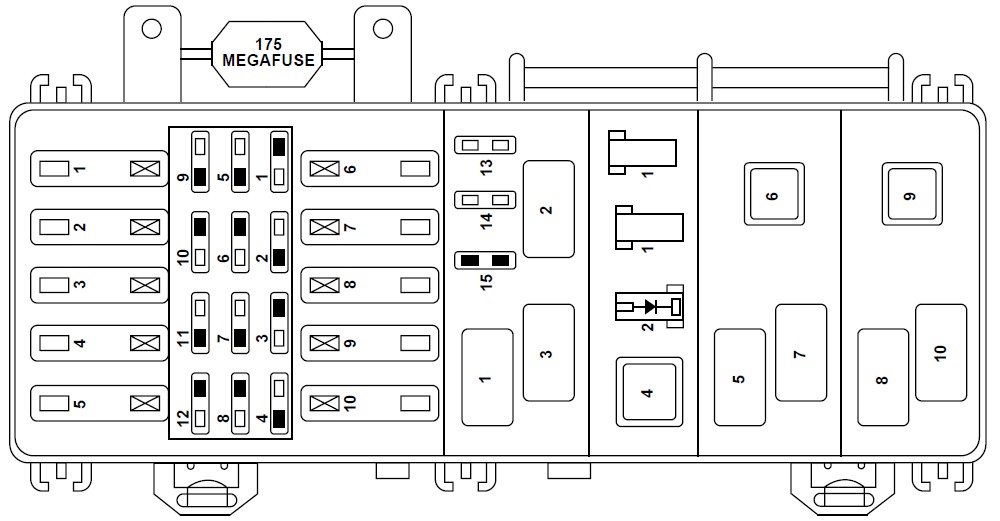
| Fuse/Relay Location | Fuse Amp Rating | Power Distribution Box Description |
| 1 | 60A** | I/P Fuse Panel |
| 2 | 40A** | Blower Motor Relay |
| 3 | 50A** | 4 Wheel Anti-Lock Brake System (4WABS) Module |
| 4 | 30A** | Power Windows, Power Moon Roof, Power Seat |
| 5 | 50A** | Ignition Switch, Starter Relay |
| 6 | 20A** | Transfer Case Relay |
| 7 | — | Not Used |
| 8 | 20A** | Air Suspension |
| 9 | 40A** | Air Suspension |
| 10 | 30A** | PCM Power Relay |
| 1 | 10A* | A/C Relay |
| 2 | 30A* | Heated Seats |
| 3 | 30A* | Heated Backlight |
| 4 | 15A* | Fog Lamps and Daytime Running Lamps |
| Fuse/Relay Location | Fuse Amp Rating | Power Distribution Box Description |
| 5 | — | Not Used |
| 6 | 10A* | Powertrain Control Module |
| 7 | 30A* | 4 Wheel Anti-Lock System (4WABS) Module |
| 8 | 15A* | Rear Wiper Motor |
| 9 | 20A* | Fuel Pump Relay and RAP Module |
| 10 | 15A* | Horn Relay |
| 11 | 15A* | Parklamps Relay and Mainlight Switch |
| 12 | 30A* | Mainlight Switch and Multifunction Switch |
| 13 | 15A* | Heated Oxygen Sensor, EGR Vacuum Regulator, EVR Solenoid, Camshaft Position (CMP) Sensor, Canister Vent Solenoid |
| 14 | 30A* | Generator/Voltage Regulator |
| 15 | — | Not Used |
| 1 | — | Wiper Park Relay |
| 2 | — | A/C Relay |
| 3 | — | Wiper High/Low Relay |
| 4 | — | PCM Power Relay |
| 5 | — | Fuel Pump Relay |
| 6 | — | Starter Relay |
| 7 | — | Horn Relay |
| 8 | — | Rear Wipe Down Relay |
| 9 | — | Blower Motor Relay |
| 10 | — | Rear Wipe Up Relay |
| 1 | — | Not Used |
| 1 | — | DRL Diode |
| 2 | — | Electronic Engine Controls Diode |
| * Mini Fuses ** Maxi Fuses | ||
Ford Explorer (2001)
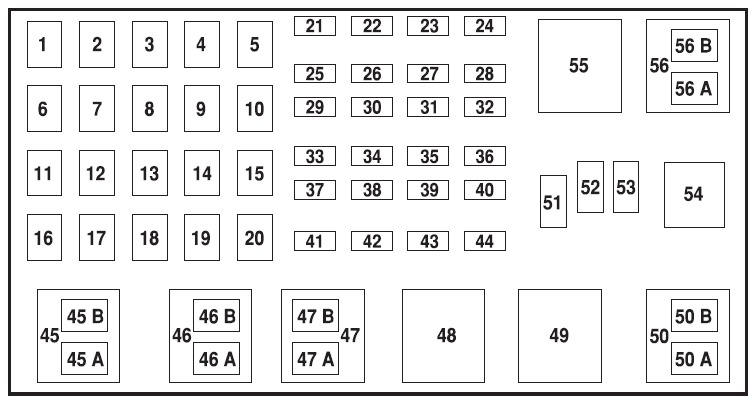
| Fuse/Relay Location | Fuse Amp Rating | Power Distribution Box Description |
| 1 | 50A** | Fuse Panel |
| 2 | — | Not Used |
| 3 | 30A** | Power Down Back Window |
| 4 | — | Not Used |
| 5 | — | Not Used |
| 6 | 50A** | ABS Pump Motor |
| 7 | 30A** | Powertrain Control |
| 8 | — | Not Used |
| 9 | — | Not Used |
| 10 | — | Not Used |
| 11 | 50A** | Ignition Switch |
| 12 | — | Not Used |
| 13 | 20A** | 4X4 Motor |
| 14 | — | Not Used |
| 15 | — | Not Used |
| 16 | 40A** | Blower Motor |
| Fuse/Relay Location | Fuse Amp Rating | Power Distribution Box Description |
| 17 | — | Not Used |
| 18 | — | Not Used |
| 19 | — | Not Used |
| 20 | — | Not Used |
| 21 | 10A* | PCM Memory |
| 22 | 15A* | Horn |
| 23 | 20A* | Fuel Pump Motor |
| 24 | 25A* | Headlamps |
| 25 | 10A* | A/C Clutch Solenoid |
| 26 | — | Not Used |
| 27 | 20A* | Rear Power Point |
| 28 | 30A* | 4WABS Module |
| 29 | 15A* | Foglamps |
| 30 | — | Not Used |
| 31 | 15A* | DRL |
| 32 | — | Not Used |
| 33 | 15A* | Park Lamps |
| 34 | — | Not Used |
| 35 | — | Not Used |
| 36 | — | Not Used |
| 37 | — | Not Used |
| 38 | 10A* | Left Low Beam |
| 39 | — | Not Used |
| 40 | — | Not Used |
| 41 | 15A* | Heated Oxygen Sensors |
| 42 | 10A* | Right Low Beam |
| 43 | — | Not Used |
| 44 | — | Not Used |
| 45A | — | Wiper Hi/Low Relay |
| 45B | — | Wiper Run/Park Relay |
| 46A | — | Park Lamp Relay |
| Fuse/Relay Location | Fuse Amp Rating | Power Distribution Box Description |
| 46B | — | Front Washer Pump Relay |
| 47A | 20A* | Windows/Roof |
| 47B | — | Not Used |
| 48 | — | Window Safety Relay |
| 49 | — | Starter Relay |
| 50A | — | Not Used |
| 50B | — | Fuel Pump Relay |
| 51 | — | Not Used |
| 52 | — | Not Used |
| 53 | — | PCM Diode |
| 54 | — | PCM Relay |
| 55 | — | Blower Relay |
| 56A | — | A/C Clutch Solenoid |
| 56B | — | Horn Relay |
| *Mini fuses **Cartridge fuses | ||
Relays
Ford Explorer (1996)
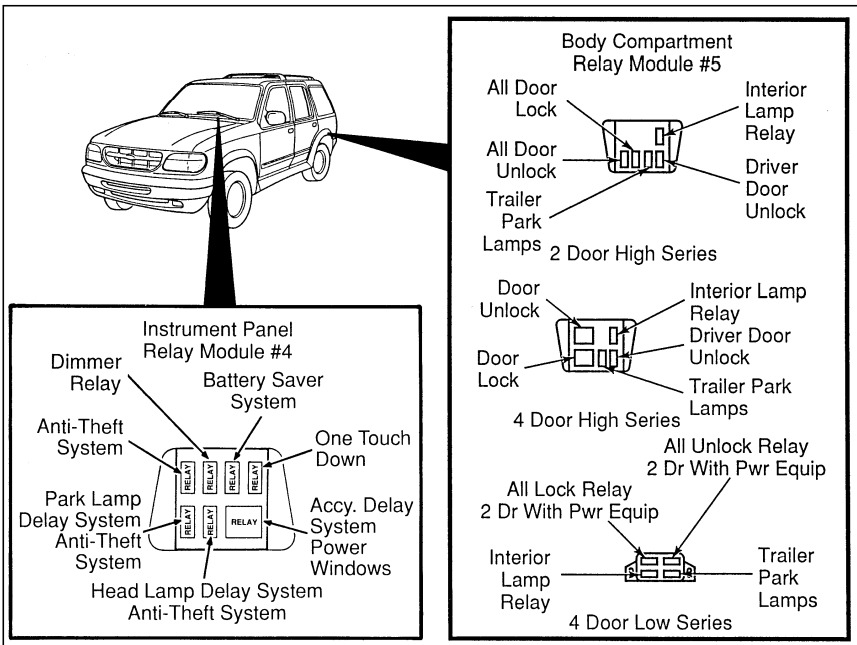
Relays and their locations
Relays are devices which recieve signals from components or systems. After receiving signals, relays transfer these signals to activate or deactivate other components or systems.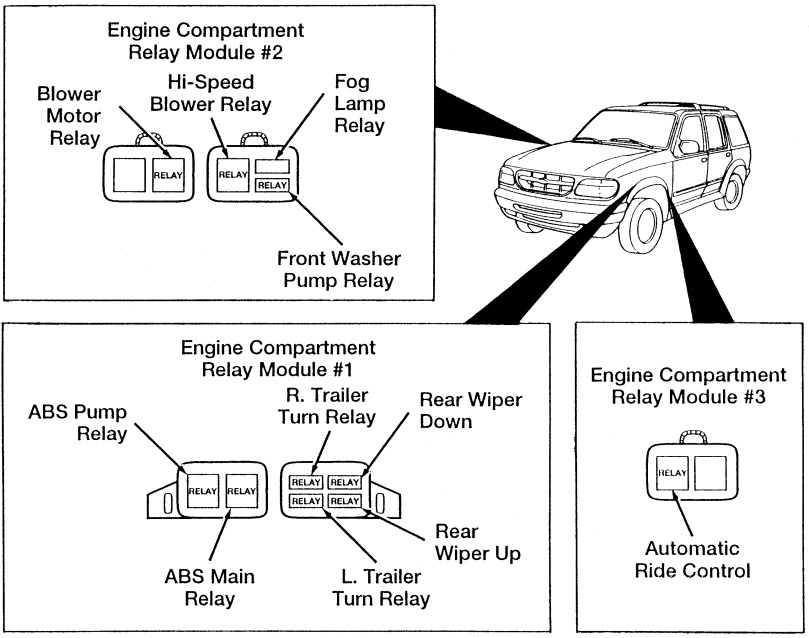
Ford Explorer (1997)
Relays are located in the power distribution box.
Relays receive signals from components or systems and transfer these signals to activate or deactivate other components or systems.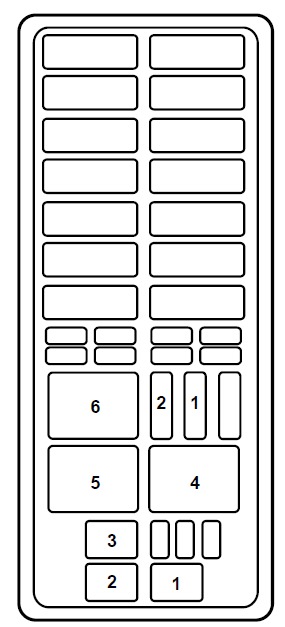
| Relay number | Circuits protected |
| 1 | Wiper run relay |
| 2 | Horn relay |
| 3 | Wiper HI/LO relay |
| 4 | WOT A/C relay |
| 5 | PCM power relay |
| 6 | Fuel pump relay |
| Diode number | Circuits protected |
| 1 | ABS diode |
| 2 | PCM diode |