Honda Civic (1996 – 2000) Fuse Box Location and Diagrams
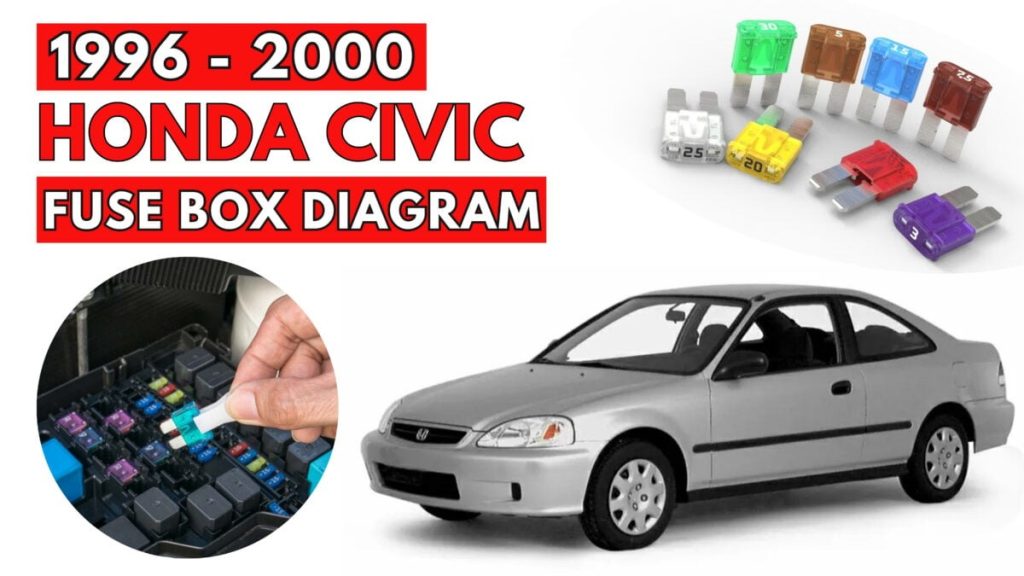
Finding the right fuse is the first step in troubleshooting electrical issues in your 6th Gen Honda Civic. Whether your power windows have stopped working or your radio won’t turn on, this guide pinpointing the locations and providing clear diagrams will help you get back on the road.
Checking and Replacing Fuses
If something electrical in your car stops working, the first thing you should check for is a blown fuse. Check those fuses first, but check all the fuses before deciding that a blown fuse is not the cause. Replace any blown fuses and check the component’s operation.
- Turn the ignition switch to LOCK (0). Make sure the headlights and all other accessories are off.
- Remove the cover from the fuse box.
FUSE
- Check each of the large fuses in the under-hood fuse box by looking through the top at the wire inside. Removing these fuses requires a Phillips-head screw-driver.

- Check the smaller fuses in the under-hood fuse box and all the fuses in the interior fuse box by pulling out each fuse with the fuse puller provided in the interior fuse box.

- Look for a burned wire inside the fuse. If it is burned, replace it with one of the spare fuses of the same rating or lower.
If you cannot drive the car without fixing the problem, and you do not have a spare fuse, take a fuse of the same rating or a lower rating from one of the other circuits. Make sure you can do without that circuit temporarily (such as the accessory power socket or radio). - If the replacement fuse of the same rating blows in a short time, there is probably a serious electrical problem in your car. Leave the blown fuse in that circuit and have your car checked by a qualified mechanic.
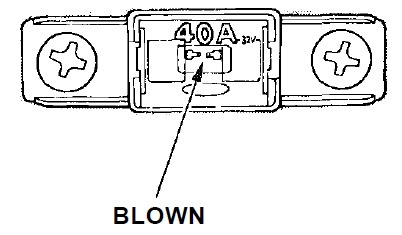
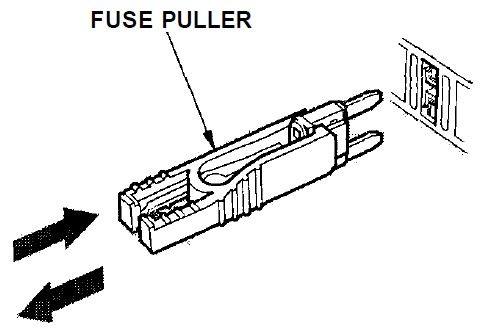
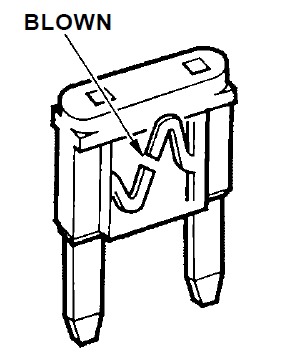
Fuse Box Locations
All the electrical circuits in your car have fuses to protect them from a short circuit or overload.
Passenger Compartment
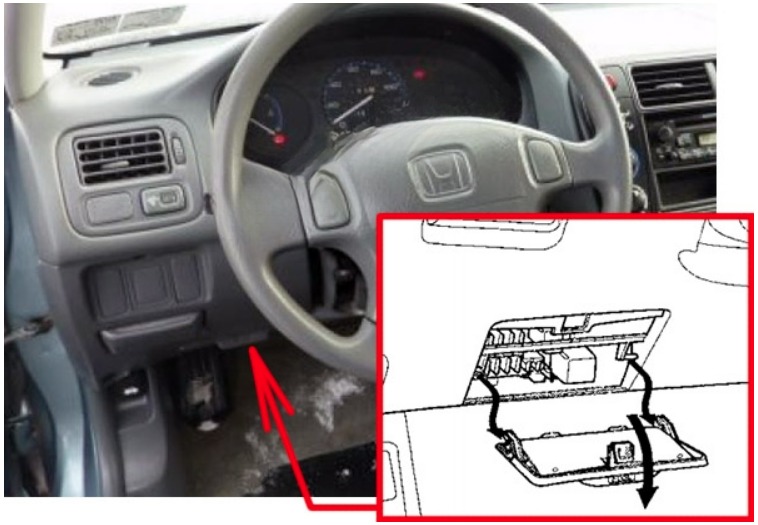
The interior fuse box is underneath the dashboard on the driver’s side. Remove the fuse box lid by swinging the lid down and pulling it straight out of its hinges.
Engine Compartment
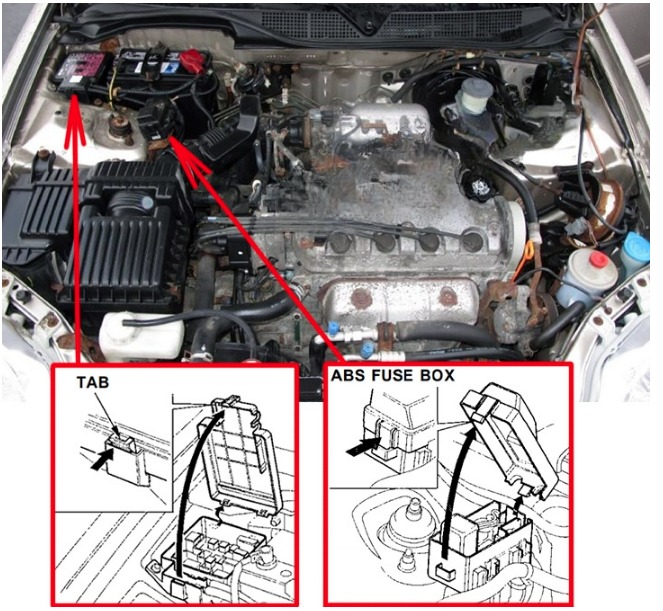
- The under-hood fuse box is located in the engine compartment next to the battery. To open it, push the tab as shown.
- Vehicles equipped with ABS have a third fuse box for the ABS. It is in the engine compartment on the passenger’s side.
Passenger Compartment Fuse Box Diagram
Honda Civic (1996 – 2000)
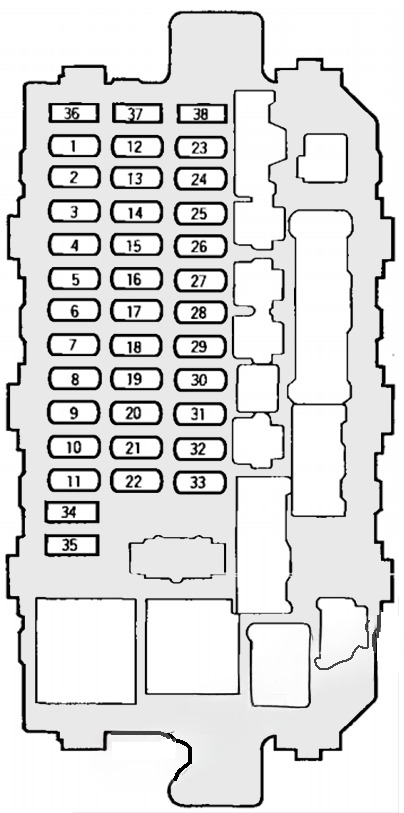
| NO | Amps. | Circuits Protected |
|---|---|---|
| 1 | — | Not Used |
| 2 | — | Not Used |
| 3 | — / 10 A | Sedan, Coupe: Not Used Hatchback: Rear Wiper and Washer |
| 4 | 10 A | Right Headlight High Beam |
| 5 | 10 A | Left Headlight High Beam |
| 6 | — | Not Used |
| 7 | 20 A | Sedan, Coupe: Rear Left Power Window Hatchback: Not Used |
| 8 | 20 A | Sedan, Coupe: Rear Right Power Window Hatchback: Not Used |
| 9 | 15 A | Ignition Coil |
| 10 | 20 A | Sedan, Coupe: Front Right Power Window Hatchback: Not Used |
| 11 | 20 A | Sedan, Coupe: Front Left Power Window Hatchback: Not Used |
| 12 | 7.5 A | Turn Signal Lights |
| 13 | 15 A | Fuel Pump (SRS Unit) |
| 14 | 7.5 A | Sedan, Coupe: Cruise Control, Keyless Hatchback: Not Used |
| 15 | 7.5 A | Alternator, SP Sensor |
| 16 | 7.5 A | Rear Defroster Relay |
| 17 | 7.5 A | Heater, Air Conditioning Relay |
| 18 | 7.5 A | Daytime Running Light Relay (Canadian models) |
| 19 | 7.5 A | Back-up Lights |
| 20 | 10 A | Daytime Running Light (Canadian models) |
| 21 | 10 A | Right Headlight Low Beam |
| 22 | 10 A | Left Headlight Low Beam |
| 23 | 10 A | SRS |
| 24 | 7.5 A | Sedan, Coupe: Power Window Relay, Moonroof Relay Hatchback: Not Used |
| 25 | 7.5 A | Meter |
| 26 | 20 A | Front Wiper, Front Washer |
| 27 | 10 A | Accessory Socket |
| 28 | 10 A | Radio, Clock |
| 29 | — | Not Used |
| 30 | 7.5 A | Instrument Lights |
| 31 | 7.5 A | Starter Signal |
| 32 | 7.5 A | License Plate Lights, Taillights |
| 33 | 7.5 A | Inter Lock Unit |
| 34 | 20 A | Spare Fuse |
| 35 | 30 A / 7.5 A | Spare Fuse |
| 36 | — / 7.5 A | Not Used / Spare Fuse |
| 37 | 10 A | Spare Fuse |
| 38 | 15 A | Spare Fuse |
Engine Compartment Fuse Box Diagram
Honda Civic (1996 – 2000)
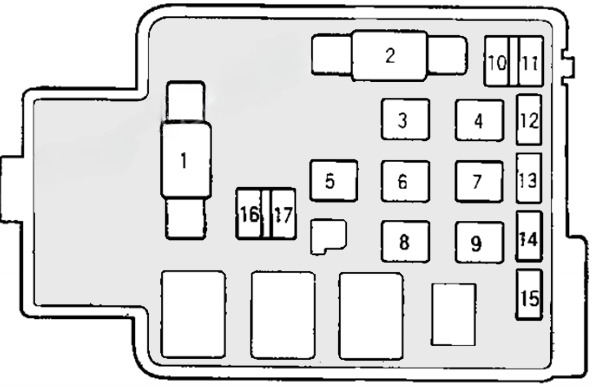
| No | Amps. | Circuits Protected |
|---|---|---|
| 1 | 80 A | Battery |
| 2 | 40 A | Ignition I |
| 3 | 30 A | U.S. model: Small Light, Stop Light |
| 3 | — | Canadian model: Not Used |
| 4 | 30 A | U.S. model: Power Window, Moonroof |
| 4 | 40 A | Canadian model: Power Window |
| 5 | 30 A | Headlight |
| 6 | 30 A | U.S. model: Ignition 2 |
| 6 | — | Canadian model: Not Used |
| 7 | 30 A | Rear Defroster |
| 8 | 30 A | U.S. model: Option |
| 8 | 40 A | Canadian model: Option |
| 9 | 30 A | U.S. model: Heater Motor |
| 9 | 40 A | Canadian model: Heater Motor |
| 10 | 7.5 A | Interior Light |
| 11 | 10 A | U.S. model: FI E/M (ECM/PCM) |
| 11 | 15 A | Canadian model: FI E/M (ECM/PCM) |
| 12 | 7.5 A | Back Up |
| 13 | 20 A | Door Lock Unit |
| 14 | 20 A | A/C Compressor Magnetic Clutch |
| 15 | 15 A | U.S. model: Cooling Fan |
| 15 | 20 A | Canadian model: Cooling Fan |
| 16 | 7.5 A | U.S. model: Horn |
| 16 | 15 A | Canadian model: Horn, Stop Light |
| 17 | 10 A | Hazard |
ABS Fuse Box
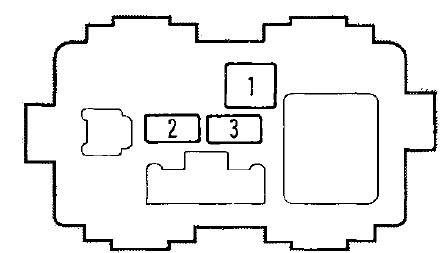
| No | Amps. | Circuits Protected |
|---|---|---|
| 1 | 40 A | ABS Pump Motor |
| 2 | 20 A | ABS +B |
| 3 | 7.5 A | Motor Check |