2026 Peugeot 9X8 Review, Specs & Price (Brochure)
Introduction
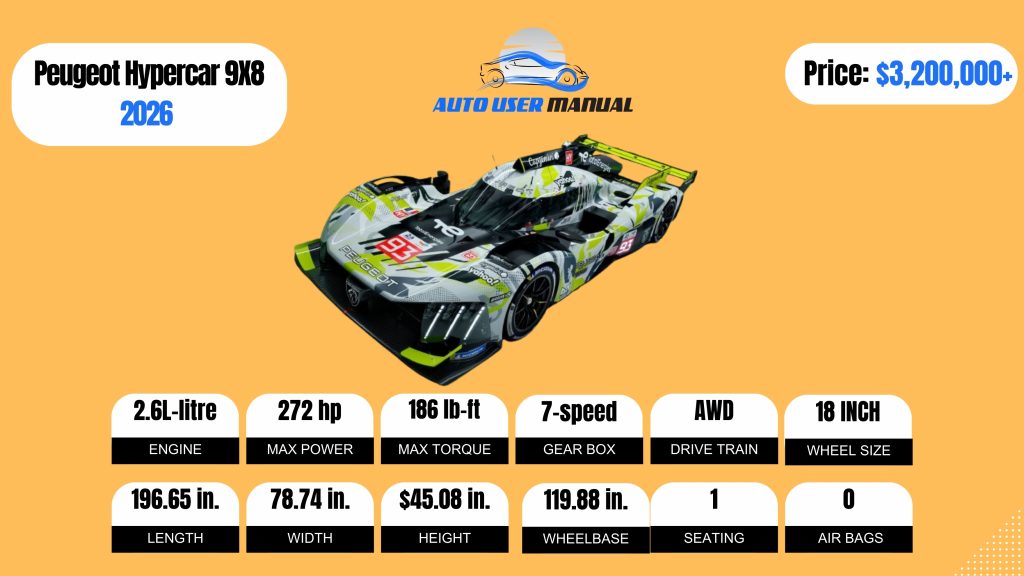
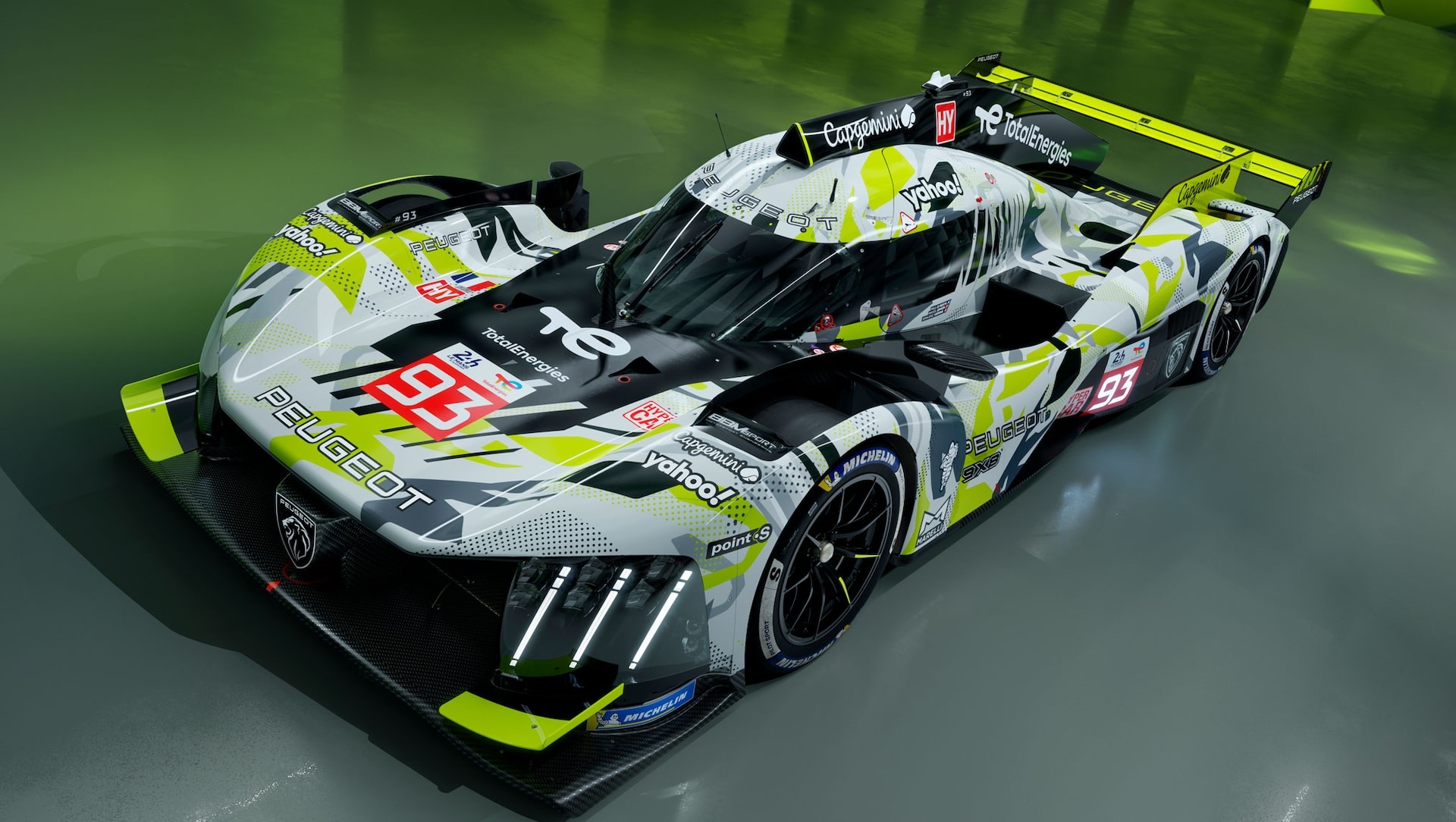
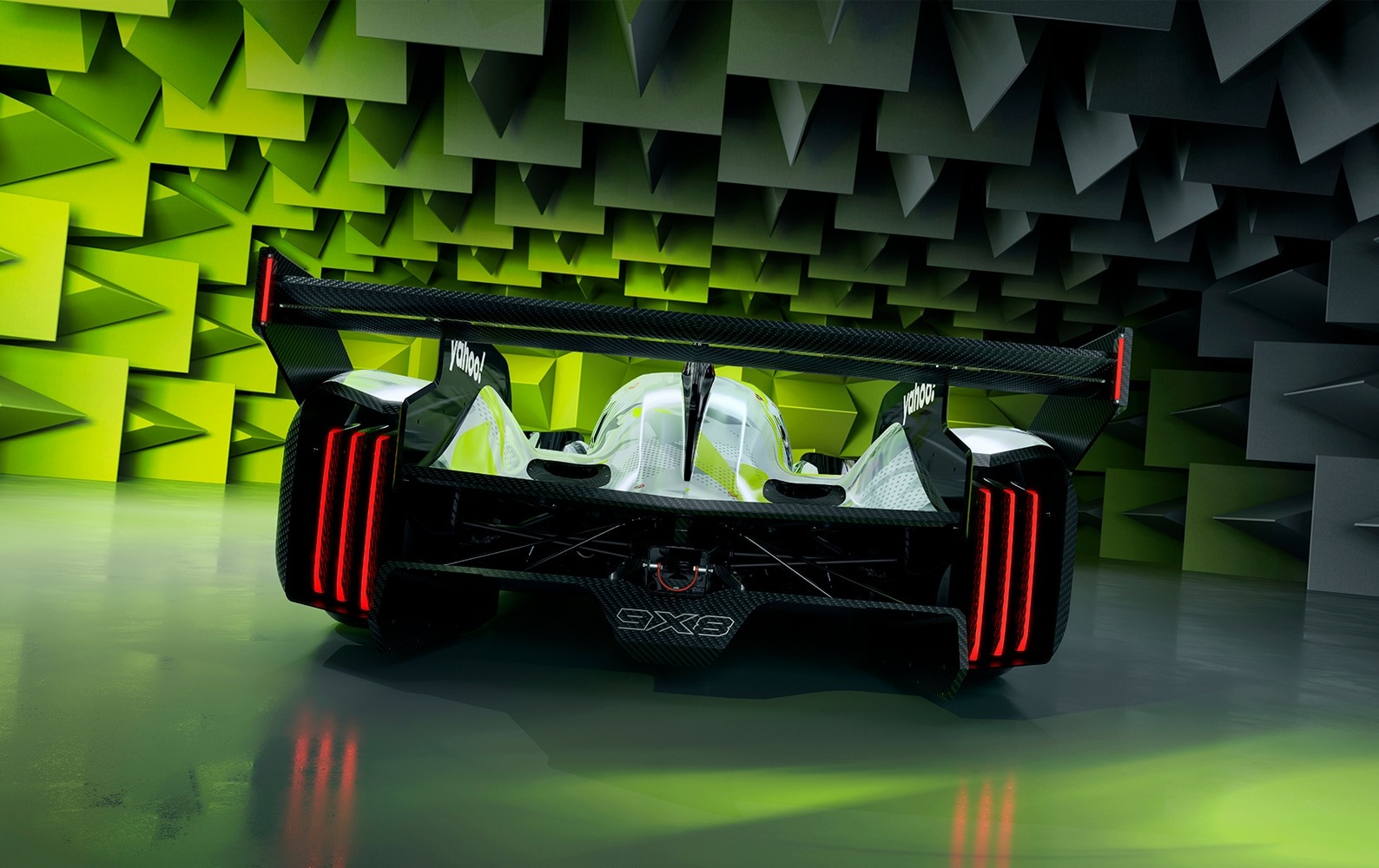
The 2026 Peugeot 9X8 Hypercar represents a pivotal evolution in French motorsport engineering. After a radical “wingless” debut, the 2026 model enters the FIA World Endurance Championship (WEC) with a refined aerodynamic profile, featuring a traditional rear wing and a revised staggered tire setup (29/34cm) to maximize grip and stability.
Pricing
Financial & Strategic Breakdown
The Peugeot 9X8 is a very different kind of Le Mans Hypercar that puts new technology ahead of classic style. With its unusual aerodynamic shape—improved for 2026—it is a high-value racing laboratory instead of a commercial vehicle. The 9X8 is a completely competitive prototype, hence it can’t be driven on the road or bought through normal means. Its worth comes from the fact that it costs a lot to build and has a complicated hybrid powertrain that needs a whole team of engineers to run.
| Category | Estimated Value (USD) | What You’re Paying For |
| Market Value | $3,200,000+ | The “Private Collector” valuation for a single retired chassis. |
| Development Cost | $100,000,000+ | Total R&D, hybrid engineering, and virtual 3D testing. |
| Operating Budget | €20,000,000 / Year | The FIA WEC “Cost Cap” to run two cars for one season. |
| Consumer Entry | $75,000+ | The road-legal Peugeot 508 PSE (the 9X8’s tech cousin). |
What’s New for Peugeot 2026 Peugeot 9X8
The Peugeot 9X8 went from being a “wingless” design that was still in the works to a strong competitor for the 2026 season. The latest modifications use technical “Jokers” to make the rear wing’s aerodynamics and the suspension’s geometry better. These were installed in late 2024. These adjustments are supposed to make it easier for the car to grip and stay stable on courses that aren’t level. The main changes are on the inside: Emmanuel Esnault is currently the leader of the team. Nick Cassidy, a star of Formula E, and Théo Pourchaire, a rising star, have joined the squad. These modifications, together with a better 2.6L Twin-Turbo V6 hybrid system, are supposed to help Peugeot go from finishing on the podium to winning the championship all the time.
Previous 4 Years Sales Chart of 2026 Peugeot 9X8

Colour Availability of Peugeot 9X8 2026
The “Power of Three” Palette
The 2026 identity is built on three core colors that define the Peugeot Sport Engineered brand:
- Selenium Grey: The sleek, metallic base that represents high-tech engineering.
- Okenite White: Used to make the graphics “pop” under racetrack floodlights.
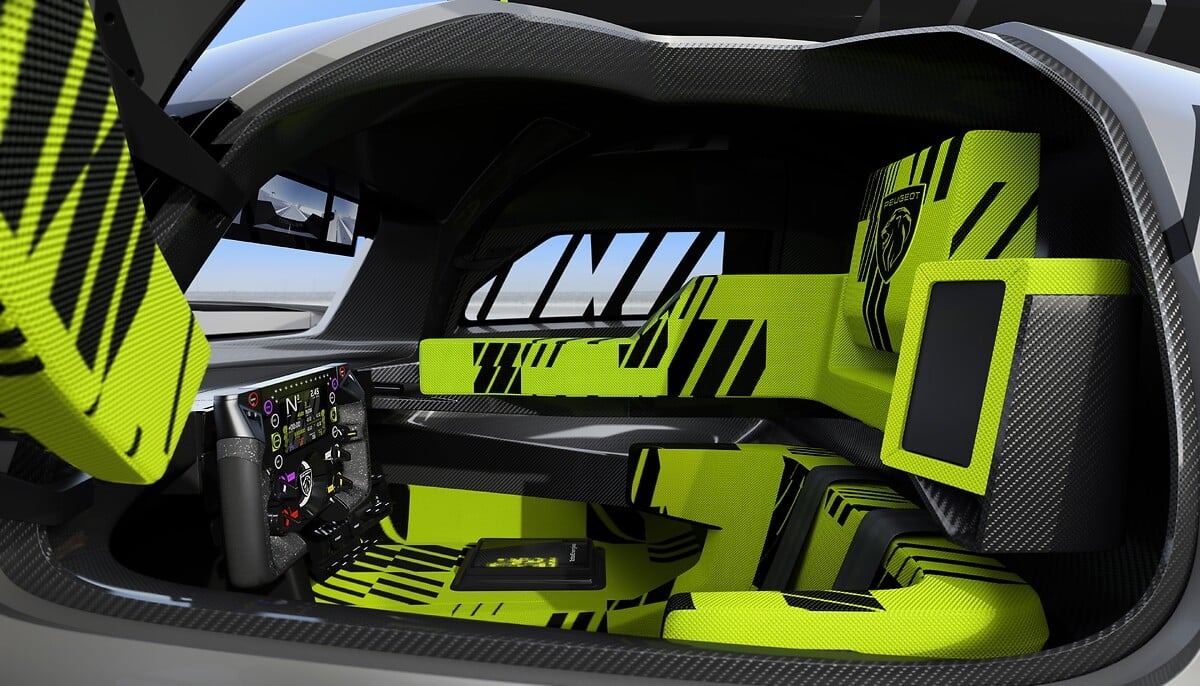
- Kryptonite (Acid Green/Yellow): This is the most important detail for your blog. It’s the signature “electrified” color used for the three-claw light signatures and interior accents.
The “Visual Logic” (Why these colors?)
Explain that these aren’t just random choices. Selenium Grey and Kryptonite are the official colors of the Peugeot Sport Engineered (PSE) division. Mentioning this connects the race car to the 508 PSE road car, making your blog more informative for people who want to buy a Peugeot with the same “vibe.”
The “Lion Head” Graphics
Don’t forget to mention the graphic pattern. The 2026 livery isn’t solid paint; it uses a “fragmented” design where the colors form a deconstructed Lion’s head across the side and roof of the car. This is a key design signature that distinguishes Peugeot from competitors like Ferrari or Toyota.
The Carbon Fiber Finish
Mention that beneath the colors, the car is made of exposed carbon fiber. In many areas, the “black” you see is actually the raw, lightweight material of the chassis. This adds a “pro-racing” technical feel to your writing.
Quick Blog Checklist
- Colors: Selenium Grey, Okenite White, Kryptonite.
- Symbolism: The “Three Claws” (light signature).
- Visual Style: Aggressive, “Lion-inspired” graphics
Specifications
DIMENSION
| Measurement | Specification |
| Length | 4 995 mm |
| Width | 2 000 mm |
| Height | 1 145 mm |
| Fuel capacity | 90 litres |
| Dry weight | 1 030 kg |
CHASSIS
| Component | Specification |
| Type | Le Mans Hypercar (LMH) prototype |
| Structure | Closed monocoque – carbon |
| Bodywork | Lightweight carbon |
REAR POWERTRAIN
| Component | Specification |
| Internal Combustion Engine (ICE) | Petrol turbocharged |
| ICE Crankcase | Aluminium machined from billet |
| Pistons | Aluminium |
| Cylinders | V6, 90° |
| ICE Capacity | 2.6 L |
| ICE Intake | 2 turbo chargers |
| ICE Power | 480 – 520kW upon BoP adjustment |
| Transmission | Sequential gearbox, 7 speed |
| Bellhousing | Aluminium – casted |
| Gearshift actuation | Hydraulic |
| Clutch | Carbon multidiscs |
| Clutch actuation | Hydraulic |
| Differential | Self-locking – mechanical |
FRONT POWERTRAIN
| Component | Specification |
| Battery | HV 900V, Li-Ion co-engineered with TotalEnergies / Saft |
| Motor Generator Unit (MGU) | HV 900V, 200 kW |
| Transmission | Single speed reducer |
| Differential | Self-locking – mechanical |
SUSPENSIONS & BRAKES
| Component | Specification |
| Suspension | Double wishbones – push/pull rods |
| Springs | Torsion bars |
| Antiroll | Torsion bars – adjustable |
| Steering | Hydraulic, electrical pump |
| Front braking | Brake by wire |
| Rear braking | Hydraulic |
| Brakes discs & pads | Carbon, front and rear |
WHEEL
| Component | Specification |
| Rims | Aluminium forged |
| Dimensions | 13×18 inches |
| Tyres | 24/31 |